Saturday, October 2, 2010

Backpacking on Demerdji Mountain


It’s a sunny though cold Saturday afternoon. I have my laundry hanging outside, getting ready to walk down to the bazaar to get the ingredients to make risotto for the neighbors tonight. I found Arborio rice so have been wanting to try it. Will be fun to do some cooking with Lenura. Up to now, our cooking together has consisted of me assisting her in her manti and cheburek (Crimean Tatar dishes) preparations, so this will be a whole different experience. Good for my language skills, I hope!
Last weekend I went backpacking up on Demerdji Mountain for three days with my PCV friends, Grace and Cheryl. Grace is young—in her twenties—and Cheryl is one of the new older volunteers in Crimea—she’s 51, I think. So I was still the old gal, but not with as big of a gap as there is sometimes. Unfortunately, Serdar had to stay home and study, despite his really wanting to come. He even thought about bringing his anatomy book with him, but finally realized he needed to work at home. I sure missed him, though. We are still going to try and get a camping trip in before it gets too cold. I just got him a sleeping bag that a returning Volunteer was giving away, so we are pretty set, equipment wise.
It was beautiful up on Demerdji. We only had a vague idea of where we were going, but it is a treeless, open plateau, so it is pretty difficult to get lost. However, hiking in Crimea is not so easy. There are many paths which crisscross frequently and none are marked. The first night we were heading for a waterfall and adjacent campsite that are shown on a Crimea hiking map I have (which is, of course, all in Russian to add to the challenge). We eventually found the campsite with the help of advice from other backpackers we met along the trails, but never did find the waterfall…or else it was dried up at this time of the season, though I don’t really think so. Finding water at all was a bit of a problem. Springs are marked on the map, but we were unable to locate them, and thus the necessity of finding the designated campsite because we knew there would be water there. And there was, but, unfortunately, it was a heavily used site, and there was a lot of garbage, a ubiquitous problem in Crimea and all over Ukraine. But we set up our tent under a beautiful old knarled tree, rustled up some fire wood (left over at another tent site thank goodness, as there was little to be found in the woods), I cooked up a simple dinner on the new stove I bought (my first camping purchase in Ukraine!), and we had a lovely evening. There was one other party, two men and a young boy, but they were nice neighbors and not too noisy. It was a cold night so there was much discussion about who should sleep in the middle, Grace winning out because of a broken zipper on her sleeping bag. Unfortunately, it was Cheryl who had the really cold night because the sleeping bag she had borrowed was more for crashing at PCV apartments.
The next day we made our way to the famous rock formations we could see in the distance at the far end of the plateau, and then down the steep mountainside to the “Valley of the Ghosts” filled with jumbled rock masses twisted into “ghost-like” shapes. We had met up with a group of middle-aged day hikers at that point, and followed the stragglers down the mountainside. It was quite difficult for us with our heavy packs. I don’t think they know the meaning of switchbacks here. So far my hiking has been straight up or straight down. I tried to create my own little switchbacks to avoid tumbling head over heels. Was glad when we got further down the hillside and the trail leveled out somewhat.
Camped that night in a really used campsite that you can drive to. Shared it with a loud party of young people (though instead of canned music they were playing the guitar and singing, so I kind of enjoyed that) a family, some pigs and piglets, a few cows, and a herd of horses. Needless to say, there was an abundance of manure around. However, in the absence of firewood, I decided to try burning dried cow patties, remembering all the stories of the pioneers in the American West burning buffalo chips. And, you know, it worked pretty well. Quite well, actually, and did not smell. Told Neshet about it later, and he said, oh yeah, they used to burn horse chips in Uzbekistan and they gave off a certain aroma that pleasantly flavored the food. Or at least, I think that is what he said!
We made our way into the local village, buying fresh grapes along the way, and waited a while for a bus down to the coast where we could get a bus back to Simferopol. While sitting there, waiting for the bus, nursing my aches and pains, I thought some about how I am getting older and some day perhaps I won’t be able to do this. But I was pretty proud of myself and my ability to keep up with the younger ones. And my spirit, that I know will never go away. I loved being in those mountains. And so next time, I hope we explore Chatir Dag, the mountain I see on my daily walks from home, and then after that, who knows….
Much love from Crimea.

Monday, September 20, 2010

A Crimean Tatar Wedding

Food prep in the back yard. My house on the right.


Waiting for the bride to come out. My door on left.
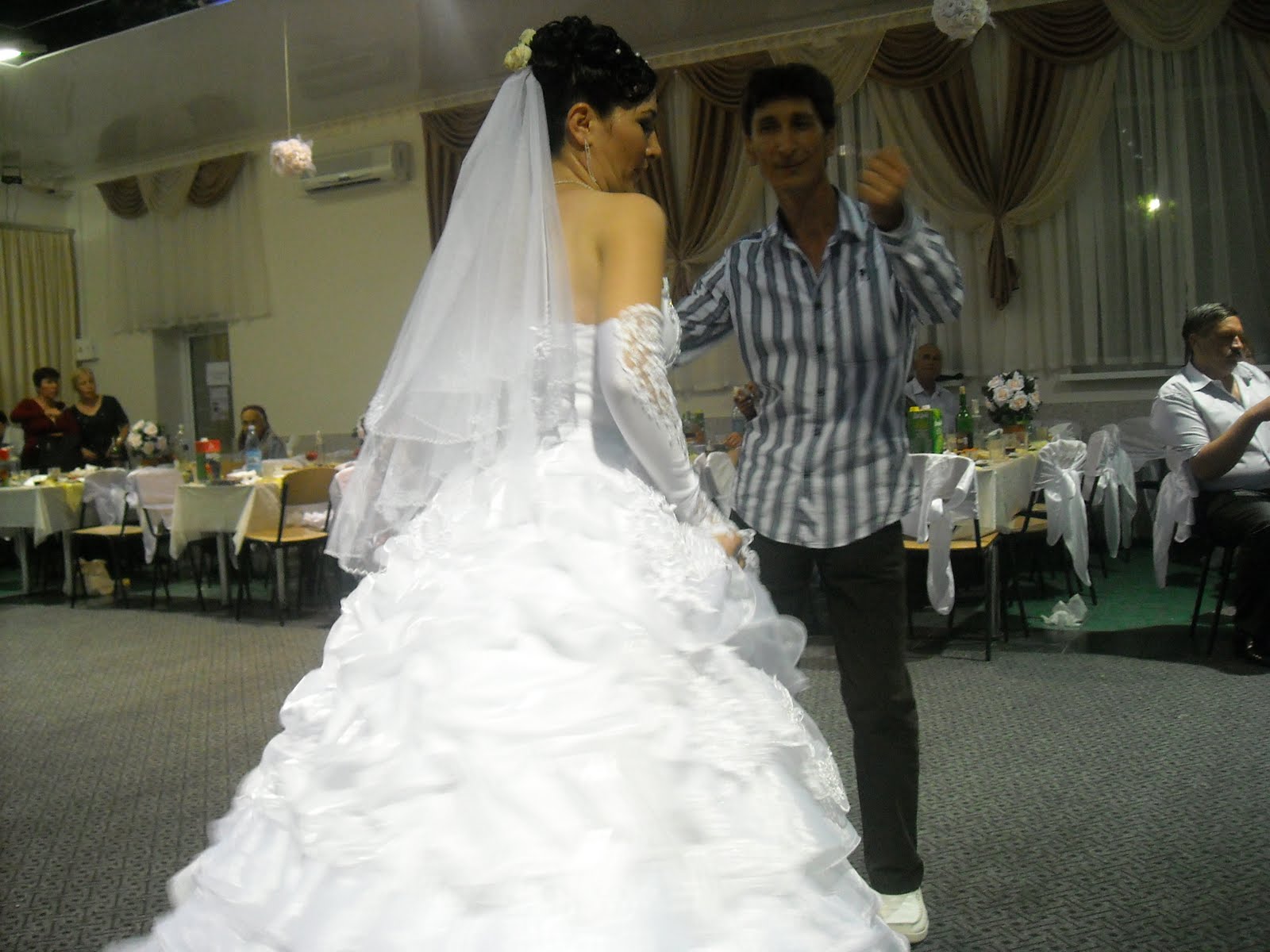
At the wedding.


It’s the wedding night. I’m sitting here at the computer, planning on getting dressed in a few minutes, listening and watching all the commotion outside as my neighbor’s large extended family gather in the street and pile into cars to take off to the reception, which is called “the wedding,” but as far as I can tell, is more of a reception.
These Crimean Tatar weddings seem to be pretty complicated affairs, complicated enough that I don’t quite get all the doings.
(Got interrupted by a call from Serdar asking where I was. Now it is Monday, and I'm at the library, not wanting to do my "real" work for some reason, so will finish this blog post.)
In the Crimean Tatar tradition, there are two weddings—one given by the bride’s family for her family and friends and one by the groom’s family for his family and friends, and even the bride and groom’s parents don’t go to both. These aren’t wedding ceremonies, but rather lavish parties which take place one night apart. And these two parties happen even if they all live in the same neighborhood. And somewhere in there is the actual ceremony and registration, the registration taking place at a “registration house” which we might call a wedding chapel, and the religious ceremony in this case at the mosque in the Khan’s Palace in Bakchseray. And even both families don’t attend these events—at least I know Maia and Server (my neighbors, the groom’s parents) didn’t.
It really was a “wedding weekend” and began the previous day when relatives started arriving at Maia and Server’s house. I had gone into the center to meet with my Russian tutor and then walked around some, checking out where to buy a camping stove, dawdling really. Finally returned home in the late afternoon. I was very tired from having slept so little the previous night, and just couldn’t get it together to go next door and join in the festivities, which meant speaking Russian. So I laid on my bed and read, ate a little supper, and eventually went over to Serdar’s family and hung out there for the rest of the evening. Felt a little guilty about not showing up at the neighbors’, which got intensified a million times when I did show up the next morning and Maia’s ancient mother was so glad to see me and told me she had asked about me yesterday, wondering where I was. Sigh…. Sometimes I think my life here is a series of wrong decisions!
But I made up for it, I think, because I spent almost the whole day at the neighbors, helping them prepare food for the wedding celebration that night where 250 people were expected. It was to be held at a restaurant, but the restaurant was only providing the meat dishes, and we all prepared the salads, cold cuts, etc. There were at least fifteen women or more working away at Maia’s—relatives, friends, and neighbors. I was on the backyard crew as we first sliced mounds of eggplant which were then fried in a large wok type pan over an open fire. Later they were smeared with fresh garlic and mayonnaise and rolled up with chopped tomatoes inside and a sprig of parsley sticking out. Quite lovely and very tasty. Went on to chopping artificial crab, cucumbers, peppers, olives, cheese for salads, and slicing huge chunks of cheese and sausages, taking a few breaks for beer and coffee (not combined!), and of course, talking and laughing the whole time. I really couldn’t follow the conversations, and as least some of them were in Crimean Tatar, but I loved being with everyone anyhow, participating in the work of the wedding.
We finally finished after about five hours, and all the food was hauled over to the wedding place. I went back to my home and put my feet up for a bit, and tried to wash the smoke out of my hair with what little water I had stored (I have no water after 1pm). Got dressed, wearing a swishy black skirt and frilly white blouse thanks to by fashion friend Cindy, put on the gold necklace of my mother’s, and even scrunched my not very attractive, callous laden feet into a pair of low heels that I had inherited from a PCV. When I went out my door, everyone was lined up in the narrow passageway between my house and my neighbor’s, waiting for the bride to come out. (Oh, I forgot that part. The bride is moving into my neighbor’s, and though I hadn’t seen her, I guess she had already shown up. I have met her a few times and really like her and look forward to another female presence next door).
I tottered across the street to Serdar’s house and the four of us took off (Safie staying home, as most children her age don’t go to weddings), getting a ride with their nephew who wasn’t going to the wedding, so Neshet didn’t have to worry about drinking and driving.
So much of the wedding was like wedding receptions we know in the States—food, drinking, music, dancing—all the basics. And here is what was different, what it made it a uniquely Crimean Tatar wedding:
For one thing, the food. There was soooo much of it, not enough room on the tables, and it kept coming all night. Many different salads, plates of cheeses and sausages and some kind of traditional meal jelly, chunks of bread, platters of camca (pastries stuffed with meat), chunks of mutton with potatoes, and a sort of breaded and fried ground meat that I forgot the name of. Also, each table had bottles of vodka, wine, juice, and water.
And then there was the music. I had heard about Crimean Tatar wedding music, indeed preserving its traditions is one of the missions of the NGO I have worked with, but apart from the music drifting out of the wedding tents in Ak Mechet, I had never really listened to it or seen it performed. I think it is what we would recognize as Turkish music but with a kind of joyousness to it. And the musicians were just fabulous—a violinist, saxophonist, accordion player, drummer, trumpet player, and maybe one more. I kept thinking that to hire a band like that for a wedding in the States would be a fortune. And that is the really interesting part of it all—the musicians are paid by people dancing with members of the wedding party. First, the sister and brother of the groom—people lined up to dance with them for a few minutes and give them some cash. Later, a pair of elderly twin aunts in identical dresses, two young men, and then finally the bride and groom. In between this dancing, there was general dancing that everyone joined in. Crimean Tatars do love to dance!
We left about midnight, but I think it went on until at least 2 or 3, because about 3:30 I was woken by a knock on the window by my bed, Maia asking me if some of the overflowing guests in her house could sleep in my extra bedroom. Of course it was fine with me, so a bunch trooped over and curled up on the three beds in that room and the mattresses we put on the floor.
The next morning there was still a gang at Maia’s house, but one by one they all left. I stopped over later to return the bedding, and poor Maia was so tired. But she had pulled off an immense task, a wedding she had been planning since I came here. And, as for me, I got to go to my very first Crimean Tatar wedding! And a great experience it was.

Monday, September 13, 2010

Odessa with the older PCV's

Street scene in Odessa center.
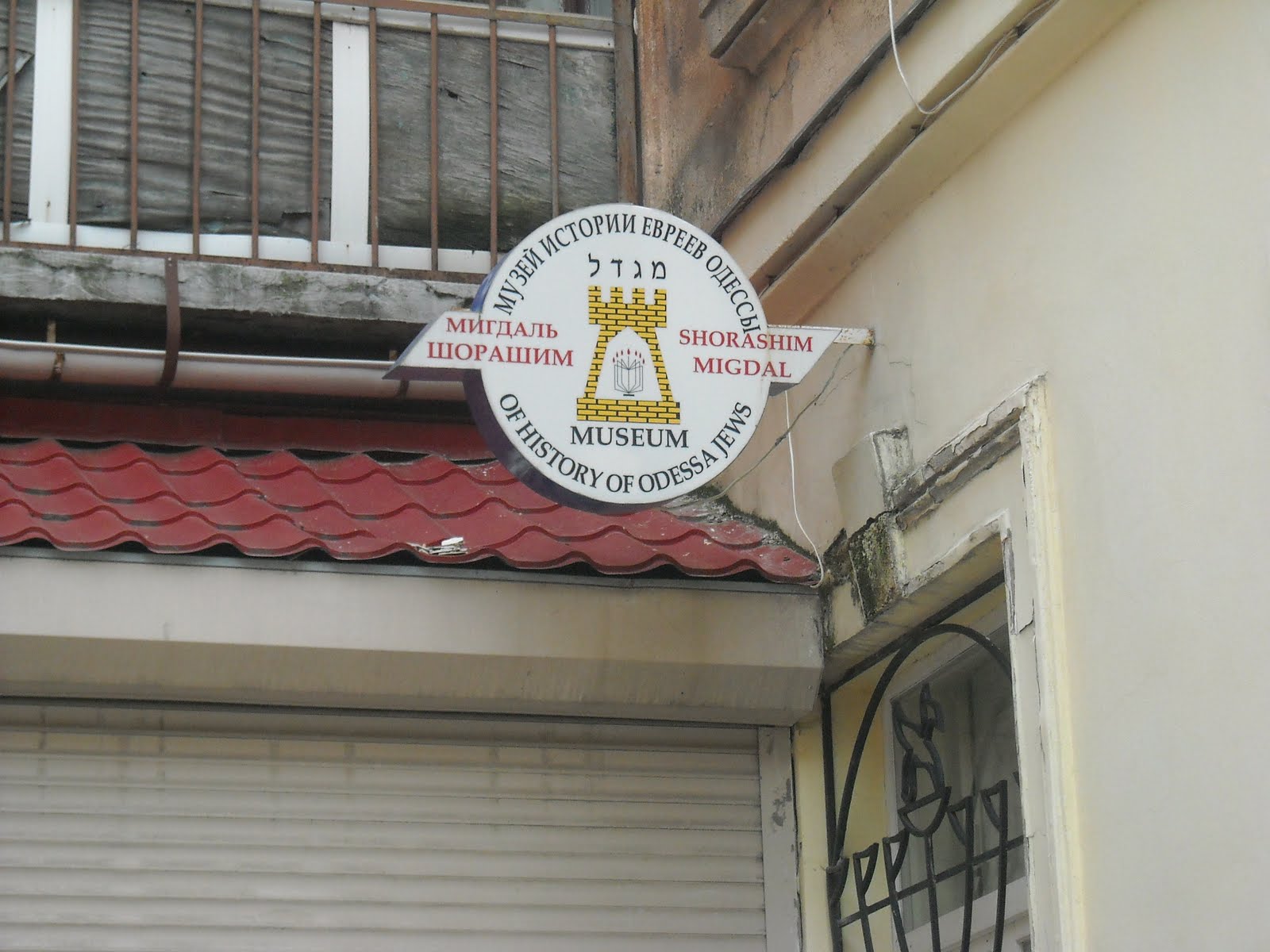
Sign for the Jewish museum.
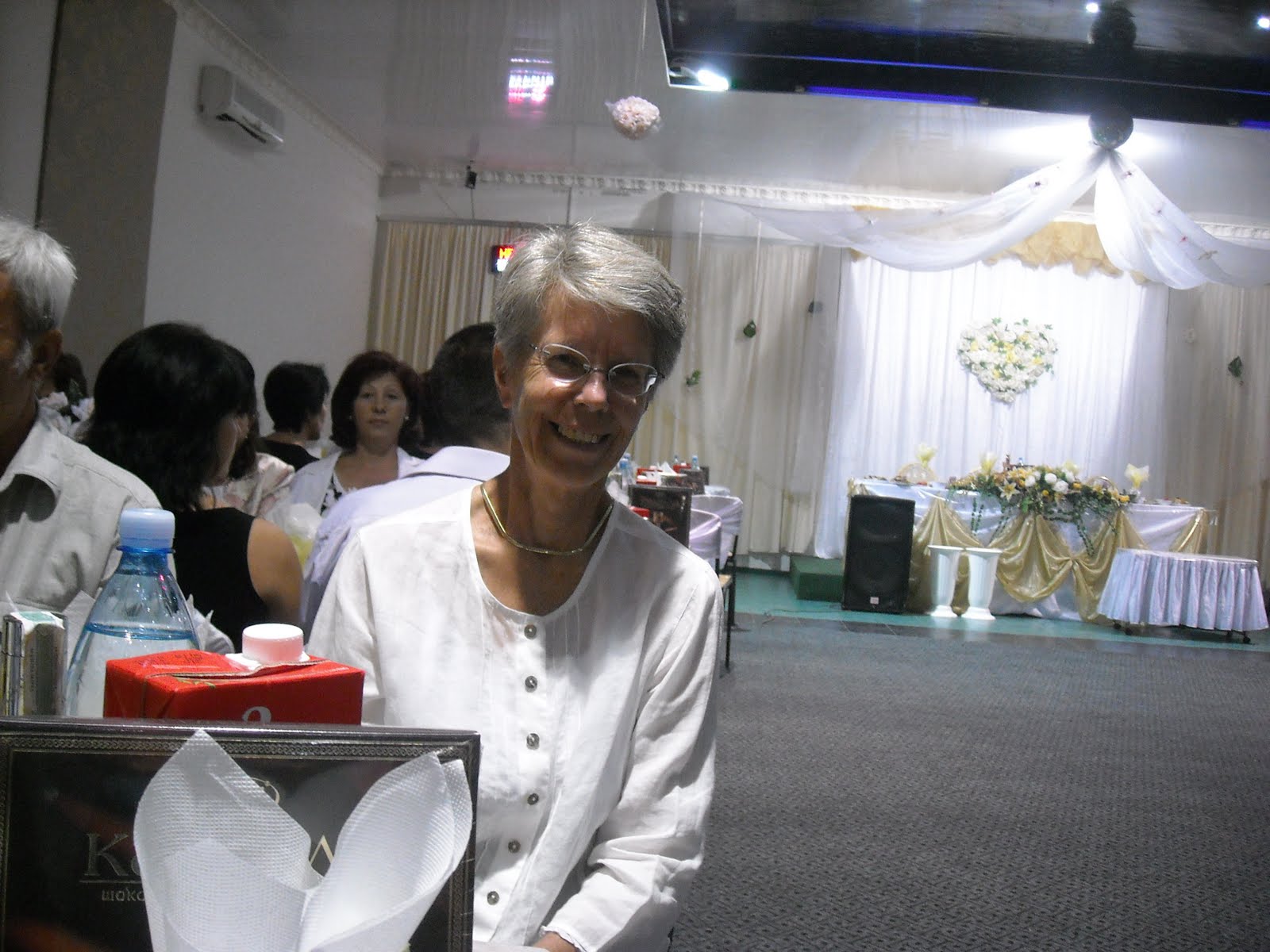
Some of us old folks having a beer. Actually, I think I might be the oldest in this group.
Inside the magnificent opera house.
Our hotel.
Monday morning at the library, just looked at my last post. My, that time on Demerdji Mountain seems like a long time ago even though it has only been a couple of weeks. Life here is a continuous parade, it seems, of new experiences and new thoughts about my life here. I have truly learned the importance of taking it one day at a time, because my despair/happiness on one day can change so radically on the next.
Two weekends ago I went to the famous Black Sea port city of Odessa. I have been wanting to visit Odessa ever since I have been in Crimea, so I welcomed the opportunity when SNAC (the over 50 Volunteers group in Ukraine—I seem to have forgotten exactly what SNAC stands for—guess that means I am truly a member of this group) decided to have their meeting in Odessa. Our “meeting” is really a pretense to spend some time in an interesting place in Ukraine. In November we are going to meet in Lviv in western Ukraine, and in the spring I and my fellow older PCVers will host the meeting in Crimea. I want to make it at a Crimean Tatar “cultural tour,” as a way to educate PCV’s about who the Crimean Tatar people are and also to perhaps develop that tourist concept among the Crimean Tatar establishments here. We’ll see how it goes…
Despite still feeling the effects of a lingering cold, I had a nice time in Odessa. One of the reasons I wanted to go was that I knew it would provide an opportunity to spend time with the new older PCV’s in Crimea, Cheryl and Vicki, and to get to know them better. They each live in villages about two hours from Simferopol. We took the overnight train together—Cheryl and me from Simferopol, Vicki from a stop two hours after Simferopol—and shared a room in the old hotel in the center of Odessa where our group was staying. We opted for the cheapest room so the bathroom was down a very long hall, but it was a huge room with many windows facing onto the main street. Unfortunately, that main street was quite noisy at night, but that is what ear plugs are for. The hotel was a find, as accommodations in Odessa are very expensive. Apparently, it was a palace of some sort at one time and had a grand staircase and large wide hallways. All a bit shabby, but really, quite lovely. It felt very Ukraine.
We arrived in Odessa on a Friday morning after 13 hours on the train (not bad coming from Simferopol where all train trips are at least overnight) and didn’t leave until Sunday evening, so we had three days to explore and hang out. Odessa is a lovely city. Not so old by European standards—it was established by Catherine (known historically as “Catherine the Great” but I have learned to drop the Great part around here. Russian czars are not looked upon very favorably by Crimean Tatars and Ukrainian nationalists) in the late 1700’s when she added Crimea and much of the surrounding land, including the Black Sea coast where Odessa is located, to the Russian Empire. The city was spared a lot of building damage in World War II, so many of the grand old buildings are still standing. The opera house was really something. It is said to be only second to the opera house in Vienna in grandeur and the elaborateness of its interior. We all got tickets to the current ballet production because we wanted to see the inside of the building. And it was certainly worth the relatively inexpensive tickets—gold leaf everywhere, tiers of balconies rising up to an elaborate domed ceiling, a red and gold velvet stage curtain. Photos definitely don’t do it justice. It looks like something that a czar would have built.
We spent the rest of the weekend exploring the center and its historic buildings and monuments, taking a short boat tour of the famous harbor, stumbling into a cat show (yes, even in Ukraine there are people obsessed with their pets), wandering through the archaeology museum with its interesting displays about ancient Black Sea cultures, photographing each other on the Twelfth Chair (from a very famous Russian story) and the Potemkin Stairs whose 200 steps lead down to the Sea (or did at one point—now they lead to a busy highway!), and just generally enjoying the beautiful weather and city and the company of older volunteers from all over Ukraine.
I also wanted to explore another side of Odessa. I had always known Odessa as the center of Jewish intellectual life in pre-war Europe, the home to many famous writers and artists. And, of course, I knew that the Holocaust devastated the Jewish population there. But I went to Odessa with the hope of seeing some remnants of that historical past where the 50% Jewish population played such a vibrant role in the creative energy of Eastern Europe. But all I found, which speaks volumes I think, was a very small (five rooms) museum of the history of Odessa Jews. It was filled with odds and ends--much of which I didn’t understand as there were no English signs--but one thing I could read was the sign showing the Jewish population numbers in Odessa, which ranged from thousands before the war to only 600 Jews left at the end of the war. And even that doesn’t tell the real story, as the soft spoken elderly woman at the museum informed us: Jews from all over Europe fled to Odessa during the war in hopes of being safe in the “Jewish capital” of Europe, only to be slaughtered along with the rest of the population, their numbers lost in the historical count of who lived and who died. The museum did little to satisfy my desire to know more about pre-war Jewish life in Odessa, but sometimes I think you learn more from realizing what is lacking than seeing what is there. Such was my experience at the museum of the Jewish history of Odessa.
Somehow this has turned into a longer post than I had planned, so I will save my other doings for the next post. The weather has cooled down here and the days are getting shorter. Nadjie is still on vacation but will be back later this week, and I look forward to our next year of work together. And who knows, what it will bring… Hopefully more Russian understanding!
With love from Crimea.
Tuesday, August 31, 2010

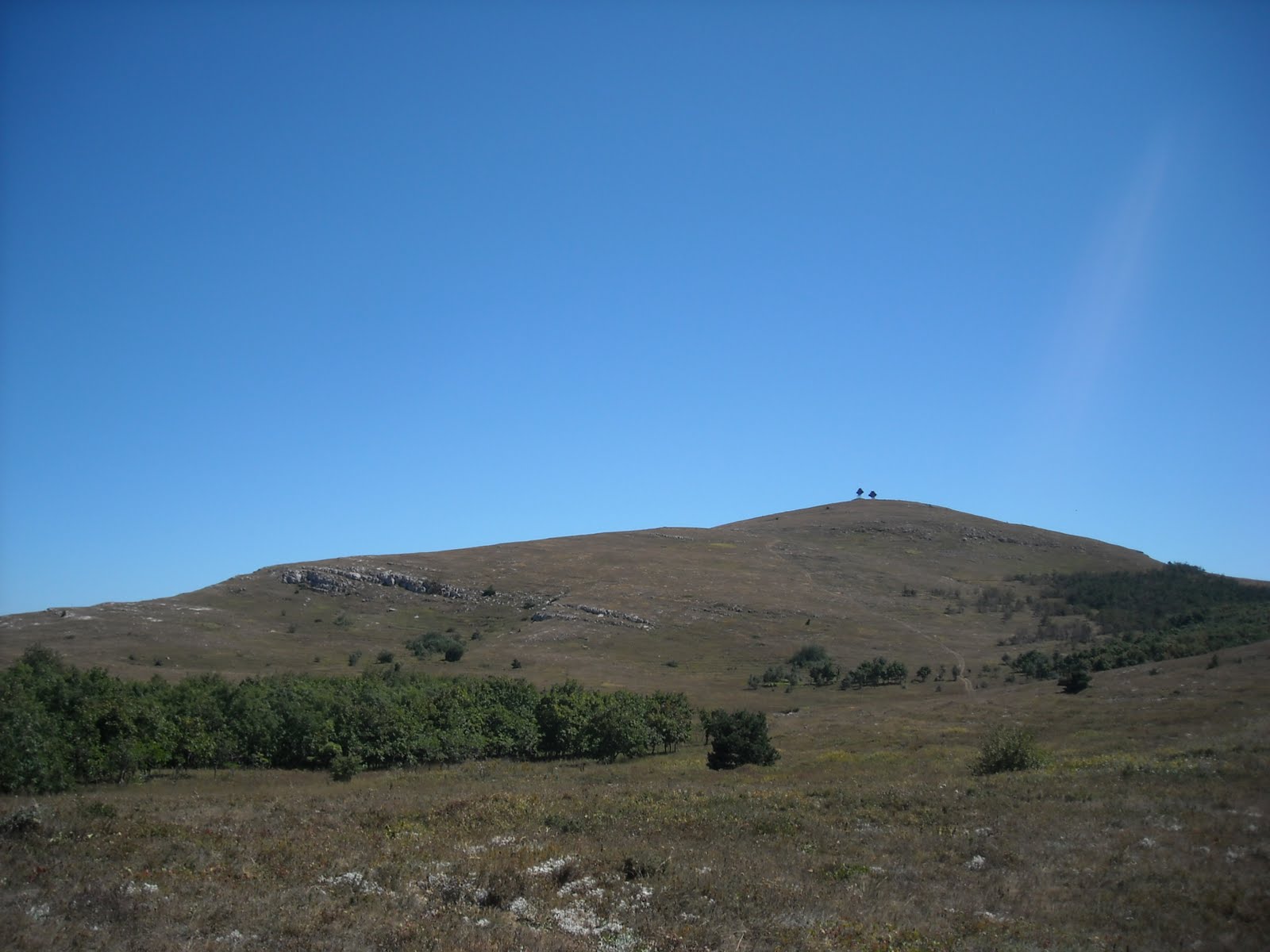
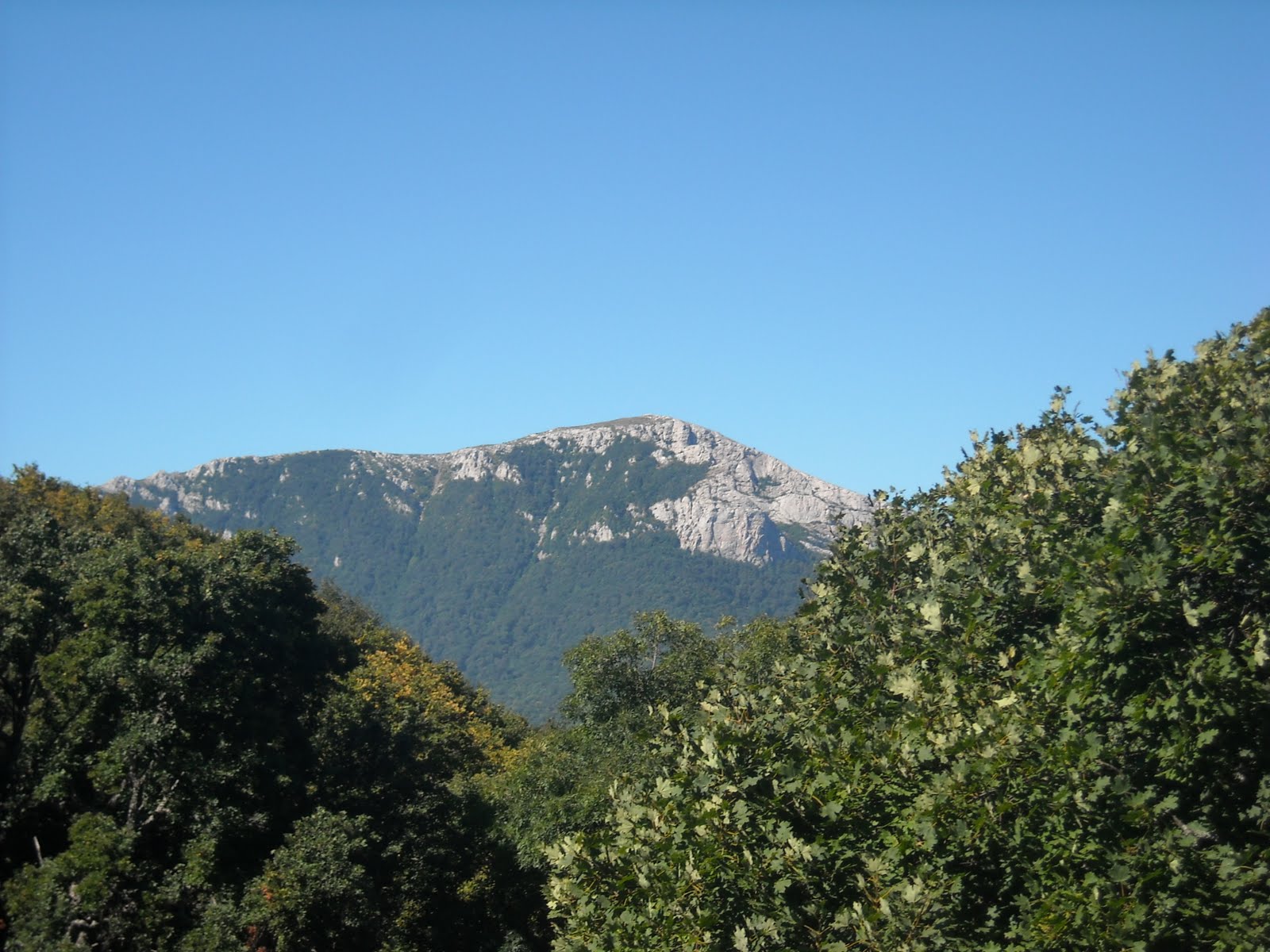
On Demerdji Mountain


Tuesday morning at the library, last day of the summer. Tomorrow on September 1st school starts all across Ukraine—same date for all schools, universities, colleges, etc.—so it is quite the day. The buses will be filled in the morning with children dressed in their finest—girls in dresses with big bows in their hair and boys in suits and ties—all carrying flowers to give to their teachers. I don’t know what university students do, but I probably there isn’t that elaborate of a ritual. It will be interesting to hear Serdar’s tales from his first day at the Medical University where he is embarking on a six to eight year course to become either a dentist or a doctor. All the students take the same classes for the first two or three years and then separate after that. He wanted to be a doctor but was admitted to the dental program, but if he does well enough, can switch to the doctor program eventually. Though, curiously, dentistry is a better paid profession in Ukraine. Someone said it is because all of those gold teeth you see everywhere. I think it is more the fact that everyone consumes so much sugar!
Feeling kind of at loose ends today. Earlier I said goodbye to Elizabeth, the Fulbright student in Simferopol that I got to know this year. She is heading back to the States to enroll at the University of Chicago. Supposedly a new Fulbright student will be coming soon, so I look forward getting to know her too. Reminds me a bit of my wilderness guiding life when so many people passed through my life for brief periods of time. I am beginning to feel like a fixture here.
I have been nursing a bad cold this past week, but earlier in the week I had asked Serdar if he wanted to go hiking on Saturday, and Friday we started trying to figure out where to go. So when Saturday came and I was still feeling lousy, I just told myself, “take some drugs and go anyways…you won’t regret it.” And how right I was. What a wonderful, wonderful day. A day that made me fall in love with Crimea all over again. These last few months have been so full of showing visitors around—something I have loved so I am not complaining—but in the summer months that has meant braving the crowds of tourists. When I was walking along the boardwalk in Yalta last weekend with my PCV friend Fran, I kept looking up into the mountains, longing to be in that wilderness. And Saturday I got my chance.
After studying the map, we decided to hike up to Demerdji Mountain. The road to the coast that I have taken many times on the bus goes over a pass through the mountains. You can get off the bus there and just start hiking. Or so it looked like on the maps. And unlike some thwarted excursions earlier in my life, this time the map was right. The three of us—Serdar and I and Adrianne, the other PCV in Simferopol—bought a ticket to Alushta, a town on the coast, but got off the bus at “pereval” (pass), about thirty minutes outside of Alushta. We asked some of the local roadside vendors for directions, and then started walking an old road/trail through the forests that lead up to the mountain ridges. We hiked for some time, taking whatever trail presented itself going in the right direction (up), and eventually encountered two men with backpacks. They were heading out for a weekend on the mountain, exploring a cave they knew about and camping for a few days. They were very experienced wilderness travelers and wanted to show us the cave. So we followed them up the mountainside with beautiful views of the coast and surrounding mountains--including Chatir Dag, the mountain I see on my daily walks at home—spreading out around us. I was so happy to be there, to know that this wilderness existed in Crimea, to know that I could come back with some camping gear and spend days exploring this vast,unpeopled landscape.
We came to the cave, hidden in trees on the side of the mountain. A large opening extended deep into the mountainside, the cold air engulfing us as we neared the entrance. At the back of the cave, there was a vertical opening leading down to another level. Our guides' plan was to repel down and explore that part of the cave. We left them at the entrance, suiting up and sipping some tea for warmth, and headed back out on the trail and on up to the mountain top, which was a vast open area that stretched into the distant horizon. We knew there were some fascinating rock formations on the mountain, and also some ruins, but we also knew that we would need more than one day to get to them. So we sat for awhile in the sun near one of the rock carons on top, eating cheese and bread and apples, talking about our countries, especially about what is wrong in America.
Serdar pelted us with questions about why Americans do the things they do. Some of his questions were very hard to answer, questions I also ask myself about what has gone wrong in my country. And my answers are few, though many times I come back to the media and their manipulation of our minds and hearts. But, of course, we let them do that. How has our ability to educate ourselves as thinking, discerning people failed so miserably? Sometimes Serdar’s questions are a matter of curiosity, as they seemed to be that day. But other times, like last night, I am taken off guard by his anger at my country, an anger that is justified in the face of all that America has done in the world. And sometimes he forgets, as we all tend to do, especially if we are passionate 16-year-olds, that citizens of a country aren’t the same as the government of a country, no matter how “democratic” a country it is. And I feel his anger towards me as representing America. But then it is over as quickly as it seems to come, and we sit down with Neshet to play cards and he turns towards me with his lovely smile, and we are friends again. But a lesson it is in how America is perceived—and sometimes hated—in the world.
But back to our mountaintop, where we sit and survey the surrounding world, making plans to return for a weekend of camping and exploring. My thoughts wander off to how old I am, how long will I be able to keep up with my friends who are 45, 35, 25 years younger than me, and how incredibly lucky and grateful I am that I am able do that now. One of the backpackers, who was not a spring chicken himself with his grey hair, but definitely younger than me, decided I was a babushka (grandmother in Russian but a word for any elderly woman) and needed “assisting.” So he lent me one of his hiking poles and stayed behind me going up steep inclines to make sure I wasn’t getting too winded. I wanted to tell him some of my history and that I really didn’t need his assistance, but I didn’t have the language for it, and besides, I liked having that hiking pole.
Got home kind of late that night, and the next day laid around trying to recuperate from my intensified cold, but oh, it was so worth all of it. My heart was, and is, filled once again with a great love for this land that is becoming my home.

Thursday, August 26, 2010

A Crimean Tatar Pre-Wedding Feast


My landlords/neighbors’ oldest son, Abdul, is getting married September 18th. There has been much talk and preparations for the wedding for quite some time. I am invited, of course, and I have been looking forward to attending—my first time to a Crimean Tatar wedding! By all accounts, they are quite the event, and include all night eating, dancing, and toasting. Despite the fact that Crimean Tatars are Muslims, they still do a lot of drinking, kind of like the Turks. The joke is that there is nothing in the Koran about not drinking vodka. Last fall Server (the father) and Abdul moved 140 bottles of vodka into my house to store for the wedding that they had gotten on sale somewhere (the vodka has since moved out to the bride’s parents house).
Two weekends ago there was a large gathering at Maia and Server’s house, a traditional part of the pre wedding ritual where the two families exchange presents, and the imam comes and blesses the couple. 45 guests were expected—relatives, neighbors, friends—and many of the relatives showed up the night before and spent the weekend. Earlier in the week I had offered to help with the cooking, so I spent much of Friday next door in the kitchen with Maia and her sisters, daughter, and mother, chopping vegetables and meat, getting ready for the early morning feast preparation the next day.
One of the traditions in Muslim culture for a large ritual gathering such as this is to slaughter a goat, or in the case of the Crimean Tatars, a sheep, to provide meat for all the dishes. Maia had told me that her brother-in-law was bringing a sheep to slaughter on Friday, but somehow the reality of that hadn’t sunk in until I came home from work Friday afternoon and glanced into the back yard, and there was a sheep, laying under the tree, staring at me with his woeful (or so I felt) eyes. I really didn’t want to be present for the actual slaughter, so I disappeared into my house for awhile. When I came out later, the brother-in-law and nephew were hacking away at the sheep carcass. Two cooking fires had been started and large wok-looking pans were placed on them to cook the food needed for the feast. Later that evening, a delicious mutton soup was made for the neighbors and relatives who had gathered to help with food preparations.
After watching them for awhile, I went inside and started helping the sisters chop and peel vegetables—mounds of carrots, onions, potatoes, garlic—taking out time to have coffee and green tea and of course, talk. We also got a tour of the refinished upstairs bedroom where the new bride will live with her husband and examined all the gifts that will be exchanged between the families. We had all gathered in the central room to do that, including Maia’s 80-year-old mother who along with everyone else, plopped herself on the floor. I was amazed at her ability to so easily sit on the floor—clearly this is something she has done all her life, unlike us Westerners. I know my mother would not have been doing that at her age. I also found out later that Maia’s mother speaks very little Russian, that she only knows Crimean Tatar and Uzbek. She is the first person I have met for which that is true, though I gather it is not uncommon among older Crimean Tatars who lived here before the deportation. I thought about how wonderful it might be to do an oral history with her. I will talk with Siyare, Maia’s daughter, about the idea when she comes back from working on the coast at the end of the summer.
One of my other jobs that evening was grinding of sheep meat to be used to make dolmades (stuffed peppers) the following day. As I was chopping up chunks of meat to be fed into the grinder, I thought of that living creature whose eyes I had looked into not so long ago, and whose body I now held in my hands and was making preparations to eat. Not since I was a child on my grandparents farm and watched the caged up chickens before their slaughter (one of which I let loose and got into big trouble) have I been so close to the connection between animal life and the meat I eat. Maybe it is the connection with mammal’s that is so profound, as I have also frequently caught fish and killed and ate them. I just couldn’t—and still can’t—get the vision of that sheep’s face from my mind. I tried to thank the sheep for giving its life so I can eat, but somehow, I don’t think it is enough. But I continue to eat meat at my neighbors’ homes and when I go to Crimean Tatar restaurants. Perhaps this experience will help me to remember what it is I am eating and to be consciously thankful that an animal has given its life for my food.
The next day dawned early and hot. I slept in, despite comings and goings in the other room of my house, as I discovered later that furniture was moved in to make room for all the guests. By the time I went next door, all the food had been prepared and the festivities were in full swing. I tried to help with serving, etc. but I was clearly to be treated as a guest and was escorted upstairs to dine with all the women. I hadn’t realized that was going to happen, so I felt way under dressed for the event, but no one but me seemed to mind. Quite a feast was laid on the table. Plates of fruits, olives, cheeses, and sweets. A thick mutton soup was served and then the dolmades along with leposhka, the traditional Crimean Tatar bread. Afterwords, there were platters of cookies, cakes, and candies, and tea and coffee were served. It is the Crimean Tatar tradition to serve first Turkish coffee and then green tea. When I asked about this, someone told me it was because in Crimea before the deportation, people only drank coffee. But in Uzbekistan coffee wasn’t available, so they drank green tea. So when people came back to Crimea, they began to serve both!
I spent several hours trying to talk with everyone—luckily I met a woman who is an English speaker at the neighborhood school, and though her conversational skills weren’t great, she could help in the interpreting when my limited Russian failed me. Finally I went back to my house, enriched by yet another Crimean Tatar experience and full of love for this wonderful culture I have found myself in.

Wednesday, August 25, 2010

a hot August in Crimea

A picnic near the lake
On the way out to the swimming rocks
Lenura and her father at the table under the grape arbor
the best peaches in the world!
Abulmeet showing us his drumming. He was a professional drummer in a band in Uzbekistan.
It’s a Wednesday afternoon and normally I would be at the Children’s Library, conducting an English Club. But I woke up this morning not feeling very well—sore throat, exhaustion—so I decided to stay home. Spent the day laying around, drinking herbal tea, reading Doctor Zhivago, my current book in the Russian literature available in English that I am working my way through at the big city library. I am really enjoying this foray into a literary world I know little about apart from author names and book titles. And I have 16-year-old Serdar to thank for this new found love of reading—all the titles have been recommendations of his. The writing is so rich that I am afraid, as Serdar says, going back to reading popular literature will be like “reading children’s stories.”
Want to take some time, though, and get caught up on my blog posts. So much has happened since my time in Belarus a month ago—two weekend trips with the Seitaptiev’s, a Crimean Tatar family celebration next door, a visit from my PCV Fran who lives in far eastern Ukraine. The trips with Serdar’s family were especially wonderful. The first was the day after I returned from Belarus. It was Neshet’s birthday and his “client” as he calls him—the man he is building a home for and also designing and building stores—offered him the use of his apartment in the coastal town of Gursof for the weekend. So off we went to what was a sleepy little town the last time I visited in October. Now it is overrun with tourists as is the whole coast, and the beach was packed. But after settling into our blessedly air conditioned apartment (the temps were in the high 90’s both days), we made our way to a less crowded beach where we rented a paddle boat and went out to some rock outcroppings offshore. And there we had some of the best swimming I have done for a long time. Beautiful clear deep water, diving off the rocks, swimming underwater, floating effortlessly on my back in the salt water of the Black Sea. Ah, it was heavenly… We all loved it so much that we did the same thing the next day. Drove home along the beautiful coast and then turned inland where we found a lovely lake to dip into and cool down. Neshet seems to have some sixth sense of where to find the best places. Perhaps his knowledge of the land is so in his genes that he knows where to go even if it is an area he has never been. But his feeling for this Crimean homeland of his also can lead to anger and frustration when access to it is increasingly denied as land is bought up by wealthy Ukrainians and Russians. We really ran into this in Gursof, as we went walking one evening intending to stroll through a beautiful park Lenura and Neshet knew about, only to find that it is now gated and guarded and you are only allowed in if you are staying at one of the “sanatoriums” (Russian word for health resorts) on the property. We did manage to get in via a bribe to one of the guards, but it was one of those incidents that just added to an undercurrent of despair that I sense from Neshet about what has happened to Crimea.
I have become more and more part of the Seitaptiev family, even having Serdar called my grandson by a family friend. And so it is not surprising that two weekends later, they invited me to come with them to a trip to the village to visit Lenura’s mother and father. I had met both of them before but hadn’t been to the village where they live, about a 2-3 hour drive from here, so an overnight trip. We stopped at the beach coming and going, which was a real treat, especially on the return trip as for some reason the water was cooler and clearer. I have gone swimming more this summer than I have in years, and I am so loving it.
Liliye and Abulmeet live in a village of about 1000 people on the “steppes”—the vast prairie lands of northern Crimea and Ukraine. There isn’t a whole lot there—houses with large gardens, livestock, and fruit trees; a school; a few small stores; and a long low building that seems to be divided into a mosque in one half and an Orthodox church in the other half. Lenura’s parents have lived there since returning from Uzbekistan nineteen years ago, along with many other Crimean Tatar families—the town is over half Crimean Tatar. Liliye and Abulmeet have a small home along with several other small structures that they live and work in and also some sheds that house their three cows, chickens, and turkeys. Their place is surrounded by flower and vegetable gardens, and fruit trees loaded with apples, peaches, plums, and cherries earlier in the season. On the hot summer days of our visit, life takes place outdoors—cooking in the outside summer kitchen, eating and hanging out under the grape arbor. Liliye’s sister and her husband who is the director of the school came over for dinner, and it was wonderful sitting around the table, feeling the evening breezes, eating the delicious Crimean Tatar dishes, talking and laughing. It is so precious to me to be included in their family the way I am now, that I could be at such a gathering and really feel part of it, despite my lack of understanding of much of the conversation.
There is more I want to write, but perhaps I will end this now. Feeling I should lie down some more, and you, my dear reader, probably are tired of reading. Will tell about my other adventures of the last few weeks in my next post. Much love from Crimea.