Tuesday, August 17, 2010

Belarus #5 Scenes from Minsk

The main street in the center of Minsk. Minsk was almost totally destroyed in World War II and was rebuilt by the Soviet government with the classic Soviet architecture.

In the location of the former Jewish cemetery in Minsk, a monument to the Jews who died there in the Holocaust.
A haunting monument at the site of the mass slaughter of the Jews in Minsk, a deep pit where they were led to their deaths.
In the apartment of Sylvia's relatives--perhaps.

Belarus #4

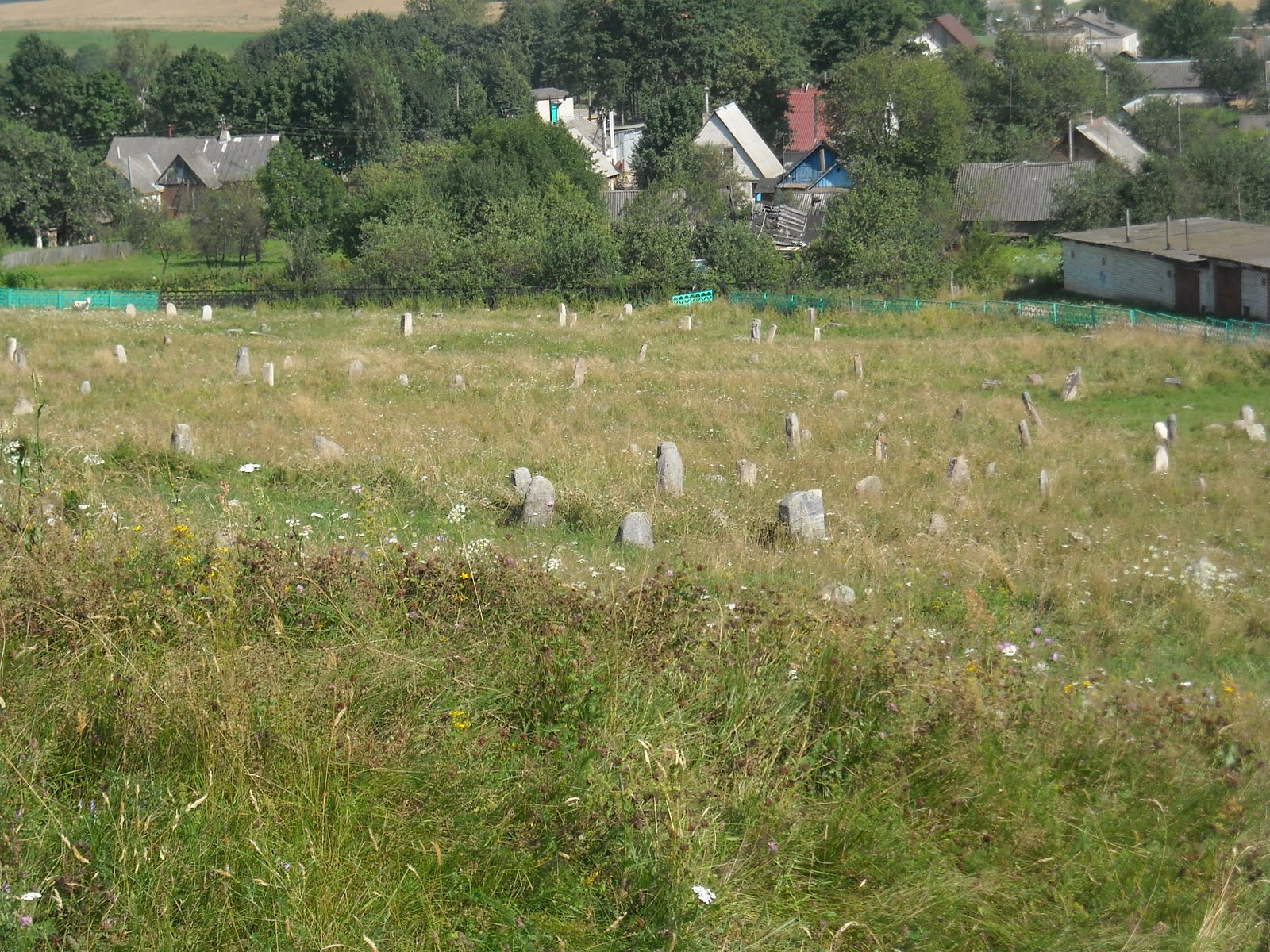
The Jewish cemetery in Navagrudak where generations of Jews are buried.
With the Imam in his mosque in Navagrudak.
Tamara's museum and a Orthodox church.
Our hotel across the street from the museum.
An old woman and her house in Sunchik.
It is almost three weeks now since I have been in Belarus, and though I want to preserve those memories, I also want to return in my mind to Crimea and all that is happening in my life. So I will try to make this the last blog post on Belarus, though part of me feels I could write for days about that one week and all we saw and did there.
One of the delightful things that happened in Belarus was learning about the famous Polish poet, Adam Mickiewicz, who was born in Navagrudak and who lived much of his early life there before being exiled to Russia and eventually living in Rome and then Paris. Tamara credits his existence in Navagrudak as the reason the town was never the site of the pogroms that habitually terrorized Eastern Europe Jews. Though the fact is sometimes ignored in historical accounts of Mickiewicz’s life, Mickieswicz’s mother was a Jew, and he was always a proponent of the Jewish people, even going so far as to advocate Zionism in a speech he gave in Paris. He is very beloved in Navagrudak. There are several monuments to him, and his home in the center of town was reconstructed and turned into a museum of his life and work. Tamara talked about him so much, it made me want to get a copy of his famous epic poem Pan Tadeuscz in English and learn for myself about this man who, as Tamara put it, lived “on the cusp of his heart.”
Another interesting discovery of our trip that I never would have suspected is that there is a small Crimean Tatar community in Navagrudak. People are there not as a result of the deportation in 1944, but from an invitation hundreds of years ago to assist in fighting the Crusaders. Thus, though they call themselves Crimean Tatars and are Muslim, they are very disconnected from Crimea and the Crimean Tatar culture that I know here. They do not know the language, not even the simple greeting of “Salaam Alekim,” do not recognize any of the traditional crafts, music, and dress from Crimea. But there is a small mosque, and Tamara arranged for us to meet the elderly Imam, and we had a nice conversation with him. He was very proud of the mosque--which he had managed to restore after the Soviets had closed it down and turned it into private residences for many years. It was decorated with many lovely paintings and calligraphy (something you never see in the mosques here), and he was delighted to show it, welcoming us to wander around inside, despite our being “uncovered” women. Indeed, he even told us that women and men mix together in the mosque, which is absolutely unheard of in traditional mosques, but he said that there are so few men in the congregation—I think he said four—that it was a necessity if he wanted to keep the mosque surviving. It was a treat to make some kind of connection back to my life here, though it was not at all what I expected, especially when I greeted him with Salaam Alekim and he didn’t know what I was saying! But it gave me another insight into the Crimean Tatar people here and the amazing fact that they were able to hold on so tightly to their culture through the decades of Soviet persecution.
And finally, there was the discovery of a relative of Sylvia’s. Tamara had heard that the son of a deceased relative had moved back to town, so she went knocking on doors in the neighborhood where he was supposed to be living until she found Yasha, a second cousin of Sylvia’s—their grandfathers were brothers. Yasha was quite surprised to see us at the door, having no knowledge of Sylvia’s existence, but welcomed us in. We found that he doesn’t know much of the family history, as his mother was not Jewish and he has her name. Both of his parents were in the Red Army, and he was not raised Jewish. But still, he had many old photos and was a likeable and sweet guy, showing Sylvia how to cook kasha when he learned she was a vegan and having a hard time eating in Belarus. Even showed her where the key was to the house, and told her to come right in and use his kitchen any time! I think for Sylvia it meant a lot to know she had a relative there in Navagrudak, someone her and her family could possibly connect with in the future.
We spent our last evening in Navagrudak making one more trip out to Sunchik. Though we did not get what we went for—a look at a home of one of the Jewish families, possibly Sylvia’s father, because the home was no longer there--it did give us a lasting memory of that beautiful land, tragically scarred with deep memories, but still so full of life.
The next day we went into the capital of Minsk to spend the day talking with a possible relative of Sylvia’s (still unclear as to whether or she is a relative) and seeing the Holocaust memorials and Jewish museum in Minsk before catching the overnight train to Kyiv. The memorials there are particularly haunting—a line of unclothed people descending into a pit at the site of the mass slaughters; a broken table and chair at the site of the Jewish cemetery. Their creativity and beauty were a welcome relief in a land dominated by Soviet style utilitarian architecture and monuments.
We bought a few souvenirs—I got a birch basket to remind myself of the northern forests so like the ones I know in Minnesota—and headed to the train station and the trip back to Kyiv, and then to home—the United States and Crimea.
It was a great privilege that I was able to accompany Sylvia on this trip to discover her “roots,” to know more of the land and place her family came from. For me, it gave me an even deeper understanding of the people I live and work with and love—the Crimean Tatars with their own deeply tragic story, and the Ukrainian and Russian people who have such a complex and painful history. I think sometimes about why I am here, specifically why I am in the Peace Corps here. And I know it is not the traditional “two years of Peace Corps service trying to do some good somewhere in the world.” For me, I think it is more about understanding a different culture than the one I have known all my life, to become part of that culture on a deeper level than day to day functioning, to find a way to love across the barriers of language and history. And I think this trip to Belarus gave me one more tiny piece towards solving that puzzle of understanding. For that, I am very grateful to Sylvia, to my traveling companion Joan, and to the universe that gave me the opportunity to be part of this world.
Good bye for now from my beloved Crimea.

Belarus #3

The memorial marking the site of the second and third mass slaughters of the Navagrudak Jews.
The memorial and burial site of the first slaughter of the Navagrudak Jews, most likely where Sylvia's family were killed.
A dugout in the partisans camp.
Entrance to the tunnel tne inmates dug and fled to freedom.
Barracks in the work camp of last remaining Jews in Navagrudak.
We spent four more days in Navagrudak--with a brief visit to the nearby small city of Baranovich where Sylvia’s mother was from--exploring the history of Jewish life, devastation, and resistance that were part of the history of Sylvia’s family. We met with another individual who lived in Sunchik, knew Sylvia’s father and family, and told us the story of how his children were taken: how they were out playing and saw the Nazis coming and ran and hid under the beds in the neighbor’s house but were dragged out by the soldiers and taken to their deaths. And how Sylvia’s father was seen a bit later riding calmly down the road on a horse, pretending to be a peasant, escaping the horror of what had happened at his farmstead.
It was so very hard to listen to this story and other eyewitness stories of the mass slaughter of the Jews of the town--people who were the storytellers’ friends, neighbors, shopkeepers. And once again, as I have so many times over the years, I wonder who we are as human beings that we can commit such atrocities, and what it does to the psychic of the people who survived. And what is passed on to the children of those survivors. But that is Sylvia’s story, not mine, and I will leave it for her to tell.
We visited many memorial sites in Navagrudak and the nearby countryside, at least some of them the result of a survivor of the Navagrudak Jewish community who now lives in England and has returned to Navagrudak many times, working with the museum that Tamara is head of to make sure that the tragic events of those times were not forgotten. And it was not only the Jews that suffered. Tamara told us that one out of every three Belarusians died in the war, as it became a battlefront between the Nazis and the Russians and entire villages were exterminated, accused of harboring Russian partisans. Today one drives the peaceful countryside and forgets that this was a place of terror and unspeakable horrors, that the rolling farmlands and dense forests and lovely lakes hide the evidence of what had happened there. But, of course, those events will always be in the hearts of the people who occupy this beautiful land, and they come rising to the surface, unwanted perhaps, but uncontainable, as the stories of the war come tumbling out.
And also thanks to the people such as Tamara who are determined that this history will not be forgotten or buried away out of sight, there are memorials marking the most tragic sites. Driving a single-track, overgrown road deep into the forest, we find the monument marking the first slaughter of the Jews and the large rectangle “grave site” where thousands of bodies lay buried. Later we visit a stone monument alongside a busy road, marking the site of the second and third mass slaughters, this time at a location in plain view, as the Nazis became more arrogant in their killing. Day lilies were flowering, the tall green grass waving in the wind, the distant wheat fields golden in the sunlight—could it be that so many people—men, women, and children, yes, children—were murdered at this very spot? How hard to reconcile these two visions, what I see before my eyes and what I know to have happened here.
We also went to the site of a tremendous act of resistance on the part of the remaining Jews of Navagrudak. Confined to a single building, living on top of one another in a dark and airless barracks, they managed to dig a tunnel over 250 meters long, hiding the dirt from the tunnel in the walls of the barracks, and on one night, 170 escaped and made their way into the forest where they hid for the remainder of the war.
And we saw the remains in the forest of the living structures of the Russian partisan groups—the Jewish partisan camp was destroyed after the war—which gave us a sense of what life was like hiding in the forests. The living structures were little more than small rooms dug into a hill side with reinforced log walls and camouflaged roofs and entrances. I think of Sylvia’s parents and what they lived through. How hard life must have been for them, especially in the winter, huddling in those cold and cramped quarters with little to eat and filled with the memories of the deaths of all those so dear to them. I try to image myself in their shoes and can’t. I can only bear witness to the fact that this happened here, that this is part of human history, and part of my history too through my friendship with Sylvia.

Sunday, August 8, 2010

Belarus #2

Tamara, our guide and kindred spirit, at her desk in the museum
Showing Joan and Sylvia the names of Sylvia's parents in the list of Bielski Jewish Partisans
The central plaza in Navagrudak with the Israelite building on the left
The location of Sunchek where Sylvia's father lived
Anatolia
We arrived in Belarus worn out from two overnights on the train, a hot day in Kiev, and of course, Joan injuring herself in the Kiev train station. But when we finally got to our hotel in Navagrudak and went across the street to the Regional History Museum to meet our contact/host/translator Tamara Vershitskaya, what a delightful surprise we had. Tamara is vibrant woman, full of energy and passion about the history of Navagrudak and the fate of the Jewish community. We were with her the whole week, and she unfailingly honored all our requests and peculiarities, and never seemed to tire of providing information, encouragement, interpretation, and joy. By the end of the week we truly recognized how fortunate we were that a kindred spirit (as we came to call her) happen to exist in a small town in Belarus and that because of her, Navagrudak had a very accessible history (Tamara is director of the museum in Navagrudak). The museum and our hotel across from it (which was a small building with only a few guest rooms and seemed to be in the midst of a major remodeling) were located just off the town center of a large cobble stoned plaza. We found out later that most of the buildings were destroyed during the war, but that two adjoining large brick houses remained, one of which was owned by Israelites, which meant someone in Sylvia’s family, though not her father.
Our first encounter through Tamara, was a man from Germany, researching the graves of German soldiers buried in the region. And on the last day of our visit, we also met another German, who was researching the activities of the last German commander of the region. How interesting that our visit to unearth information about Sylvia’s family was bookended by our encounters with Germans, both of whom were involved in researching the German history of World War II. I noted that Martin Holler, the young man that we met at the end and who I found especially interesting as his specialty was Romas (gypsies) and the Holocaust, always referred to the Germany of the wartime as Nazis, whereas we tended to just say “Germans.” It made me think how I would feel to always hear “Americans” when a horrific part of our history was discussed. And it made me resolve to try and use the word Nazis in the future.
We had a brief lunch at one of four restaurants in town, this one owned by a successful Jewish businessman (we found out later that at least one of the other restaurants is state owned) and then took a walk to the ruins of a castle, the history of which I seem to have forgotten, except that it was destroyed by Swedes in the 1700’s. What I do remember that it is located on a high hill which turns out to be the second highest point in Belarus (Belarus is a very flat country) and provided beautiful views of the rolling farm land, forests, and the town of Navagrudak.
The next morning we met with Tamara at her book lined office in the museum and went on a brief tour of her museum. I have been to a few museums in Ukraine and have never been too impressed with them—outdated and uninteresting displays, poor lighting, and no place to sit down. Tamara’s museum was so different—the displays looked fresh and well done and had a natural logic to them as you went through the museum. And in each room, there was a padded bench in the middle of the room to rest and contemplate the information (Joan found this particularly helpful as she needed to stay off her bad ankle as much as possible). It clearly reflected Tamara’s enthusiasm for the history of the region and talent for museum work.
After the museum tour, we headed out to meet with a man in his 80’s named Anatolia, who had lived in Sunchek and knew Sylvia’s father and his family. Though the beginning conversation was slow and awkward, as it dawned on him who Sylvia was, he was overcome with tears many times as the painful memories of the war came slowly bubbling to the surface. Though he couldn’t tell us many details, just the fact that he knew her father and his family, that he had lived in the same community, meant so much to Sylvia. It was hard to sit there as he cried and tried to tell the stories, and it made me realize how much pain people, especially old people, live with in this part of the world. And I couldn’t help but wonder if we were doing the right thing, asking questions that clearly brought forth such hurtful memories. But that question was answered when he told about Sylvia’s cousins escaping into the forest, and Sylvia told him that they had survived, that they were living today. The look of disbelief and then overwhelming joy on his face made me realize that Sylvia’s presence had given him a great gift, that at least one of his unthinkable memories could turn into something wonderful. And just meeting Sylvia also gave him that gift, as he had no idea what had happened to her father after the war, and here was his daughter, 60 years later, sitting in front of him.
After talking with him for an hour or so, we all piled into the car (we were driven around the whole time by a hired car and driver who sometimes got totally annoyed with Tamara but she just ignored him and continued to tell him what to do) and went out to Sunchek, where a few families, including Anatolia and Sylvia’s father, lived before the war. Anatolia couldn’t really remember exactly where her father lived, but I think just being there on the land was important to Sylvia-- to see what a beautiful, peaceful place it was and imagine her father working at his grain mill and raising his four children. On the way back to Navagrudak (after leaving Anatolia in Sunchek to have “50 grams of vodka” with his nephew who lived in one of the few houses still standing), we stopped at a nearby spring fed small lake, where almost for sure, Sylvia’s father went swimming. Sylvia and I got in and immersed ourselves in the cold, clear water, as he must have done many times on hot summer days in a different world long ago.

Saturday, August 7, 2010

Belarus #1

The rolling farmland of Belarus from the 2nd highest point in the country.
A nearby pond where Sylvia's father and family probably went swimming.
The government supplied fences made out of concrete.
In Sunchek.
A building in the Minsk center.
It is Saturday afternoon about 3:30, I’m sitting here in the sweltering heat—just checked the internet and it is 39 degrees Celsius, which is about 103. I have my windows shut up against the afternoon heat, but I feel trapped and really want to go for a walk, trying to get myself to wait until a little later. My recently acquired fan (thanks to Neshet and Lenura) has gone over to the neighbors for their big family gathering this weekend. But I just put a wet rag around my neck—that helps. The Crimean Tatars say that this weather is what Uzbekistan was like.
But I really want to write about Belarus, before I get too far away from the experience. Belarus is a country that I never thought I would visit. Even living in this part of the world, it is not a place people travel to, even locals unless they have family there. There are very few “tourist destinations” in Belarus, and the government doesn’t exactly promote tourism, as far as I can tell. They certainly don’t make it easy to get visas, as I said in my last blog. But in spite of all of this, I found the little part of Belarus where we stayed for a week very beautiful, the people friendly, and with a rich, but tragic, history. Like Ukraine, Belarus is a region that is a borderland between two bigger countries, and its destiny over the centuries has been dictated by its ever changing occupation by Poland or Russia. At the beginning of World War II, Belarus was first part of Poland, then occupied by Germany, and at the end of the war, it became part of the Soviet Union. Though today it is an independent country, it is the former Soviet Bloc country that has remained closest to the Soviet model, with a near dictator for a president, limited freedom of speech, and continuing government ownership of some industry and collectivized farms. But as a result of such a government, it has at least outwardly, a much more neat, organized, and prosperous look than does Ukraine. It is very clean and kept up looking. The frequent litter and piles of trash and crumbling infrastructure that I have come to accept in Ukraine, were noticeably absent in Belarus. Minsk, the capital city, was particularly neat and orderly looking, in part due to the fact that it was pretty much leveled during the war and rebuilt with the utilitarian looking Soviet architecture. But even the countryside had that look about it, and the town of Navagrudak where we spent our week, had picturesque fences lining the major thoroughfares, fences which we found out later were supplied by the government to present a “nice appearance,” ignoring, as our Belarus host said, what was on the other side of the fences. We were located in the central part of Belarus, and the land reminded me so much of Minnesota—rolling farm land of wheat and barley fields, frequent forests of birch and fir trees, marsh lands, clear cold lakes and rivers. It was quite beautiful in a way I did not expect. Not a dramatic beauty, but that beauty you find in the American Midwest and which has been a constant throughout my life.
But the history of Belarus, and why we had ventured there, couldn’t have been more different from my land of origin. My friend Sylvia’s mother and father were from Belarus. Her mother was from the town of Baranovichi, and when she married, she moved to Navagrudak. Sylvia’s father was from Sunchek, a small farming hamlet outside of Navagrudak, a town of about 10,000 and 64% Jewish at the time of World War II. Both of her parents were married at the time of the war and had children. All of their families perished in the Holocaust—Sylvia’s mother’s sisters, brother, parents, husband, and 18-month-old child. Sylvia’s father’s wife and four children and other relatives were also killed, though he managed to rescue three young nieces who are alive today and living in the U.S. and Israel. Both her parents hid out in the forests and near the end of the war became part of the Jewish Partisans known as the Bielski Partisans whose story was recently depicted in the film, Defiance. They met in the partisan group and then married at the end of the war and immigrated to the U.S. So armed with what little knowledge she could gleam from her cousins’ memories, her own memories of her parents stories (her parents are no longer alive)and recent visits of other Holocaust survivors, Sylvia came to Belarus to find out what she could about the homeland of her family.

Off to Kiev and Belarus

Sylvia in our train compartment
Joan on the funicular.
The funicular heads up the steep hill
The monument marking the ravine where the Jews were slaughtered at Babi Yar.
Sunday afternoon Joan and Sylvia and I clambered aboard our overnight train to Kiev. Because there are three of us, I also bought the 4th seat in the kupe, so we would have a compartment to ourselves. And a good thing it was, because we immediately spread our stuff everywhere, making me wonder how Sylvia and I were going to be able to share a kupe with strangers on our return trip from Minsk (though we did just fine). And what a blessing—it was air conditioned. There definitely is something to be said for traveling 2nd class in this heat….
We arrived about 8:00am, checked our baggage at the train station, and set out to explore Kiev before returning to the station in the evening for our overnight train to Minsk, the capitol of Belarus. The first stop was the Belarus Embassy so I could pick up my visa I had applied for several weeks earlier when I was in Kiev with Serdar. Getting a visa to Belarus is not an easy process for an American. It costs $120, takes a week or more to process, requires a letter of invitation, and you need to account for your whereabouts the whole time you are in Belarus (our hotel had to file a registration for us at the local police station). So I was a bit concerned until I had my visa in hand, but it was net problema (no problem)—they were very friendly at the embassy and the person I dealt with spoke English. Actually, despite the warnings that Americans weren’t liked in Belarus, almost all the people we met were friendly and helpful, more so than in Ukraine, I think.
It turned out to be a very hot day in Kiev, which made it difficult to want to stroll around the city much. But with the help of the Metro (the amazing, very deep, Soviet built subway system, complete with mosaic and chandelier decorated stations), we managed to visit a few sites. At the top of our list was a journey to Baba Yar, site of the execution of more than 100,000 people by the Nazis during the war, and in particular, the site of the single largest massacre of the Holocaust, when in 24 hours, 34,000 Jews were marched to a ravine and shot, believing until the very last minute that they were going to be deported. I had been to Baba Yar before and knew that there were three monuments there—a small one near the Metro stop dedicated to the children killed, a very large Soviet built monument that did not even mention the Jews that were killed, though in recent years additional explanation of the monument has been added; and a third monument in the form of a menorah, which is near the actual ravine where the Jews were killed and buried. This monument is in a more remote part of what is now a large park, and we had quite a bit of difficulty finding it. No one seemed to know where it was, or even what it was. Finally, we asked a Jewish looking gentleman, who instantly knew what we were talking about but had to call his friend for directions. After more walking in the heat, we made it to the memorial and stood on the edge of the ravine, gazing into a now tree filled valley, and thought of what had happened there--the men, women, and children whose lives had so cruelly ended at that spot. It was the beginning of many such memorials we would be at on this trip, and the edge of a deepening spiral of our comprehension of what had happened in this part of the world.
We went back to the center and found a restaurant a fellow PCV had told me about that has “nut burgers,” a vegetarian rarity here in Ukraine. And it wasn’t too bad—it at least gave Sylvia an alternative to the salad and potatoes she had pretty much been forced to eat when we dined out. Afterwards, despite the heat and a beer (that was a mistake), we wanted to see the ancient Byzantine church of St. Sophia, Kiev’s oldest existing church. We made it to the bell tower at the entrance and entered the lovely, peaceful grounds surrounding the church, but unfortunately the church itself was closed. After wandering around a bit, we left and followed the winding street of “Andrew’s Descent,” past writer Bulgakov’s house/museum (I just finished his Master and Margarite, now one of my all time favorite books) down to the ancient area of Podil, and took the funicular back up to the park along the Dnipro River, walked the park a bit, then took the Metro back to the railway station to catch our overnight train to Minsk. However, in our hurry down the steps to the train platform, we had a mishap. Joan missed the last step and came crashing down on her knee and twisted her ankle. Passer bys came to the rescue and helped us gather the strewn luggage and get Joan back on her feet, but it was a hobble to the train, and her injuries would plague Joan for the rest of the trip, making it difficult for her to participate in the way she would like. Luckily, her knee didn’t seem too bad after the swelling went down. We got an ace bandage for her ankle, and she was able to limp around on it the rest of the week, though enduring some pain to do it.
The train was very hot when we finally got on. I managed to get a little bit of ice from the conductor for Joan’s swelling knee and ankle, and we fanned ourselves until the train started up, which kicked in the blessed air conditioning. It was a pretty luxurious train by Ukrainian standards and we had our compartment to ourselves, so it was as nice trip as it could be, given Joan’s condition and being awakened by the border crossing guards (four!—two from Ukraine and two from Belarus) at three in the morning.
We arrived in Minsk, the capitol of Belarus, at 8am. The plan was for us to be picked up by a shuttle to go to Navagrudak where we would spend the week, but the arrangements got mixed up, and we quickly found that my cell phone wasn’t going to work in Belarus, despite assurances that it would. So we missed the shuttle, but eventually we were able to make our way to the bus station and on a bus to Navagrudak, and once there, a taxi to our hotel.
So now we are in Navagrudak, where Sylvia’s father was born and lived and her mother too after she was married. And here our real journey began.

Wednesday, August 4, 2010

Joan and Sylvia come to Crimea!


So much in my head, so much to tell. Will try to break it up into a few posts, I think. My dear friends from America, Joan and Sylvia, arrived in Simferopol on a Monday, after a long journey from San Francisco to New York to Kiev to Simferopol. Serdar and his cousin came with me to pick them up at the airport, but then the cousin’s car wouldn’t start. So there we were, the four of us pushing the car in the parking lot to jump start it. Wish I had a picture. Kak Ameriki (like America), as we say here. Or I guess like my earlier old car days in America.

Despite this questionable beginning, the three of us had a great time exploring a bit of Crimea. They were good sports about my humble accommodations—a toilet with only a curtain for privacy, no water after 1pm (and sometimes earlier), a windowless room—and some pretty hot weather, though compared to how it is now (consistently high 90’s), it wasn’t that bad. For their first night here, Lenura prepared a truly sumptuous vegan meal, after much consulting with me in the previous weeks. As Sylvia said at the end of the trip, it was the best vegan fare we had the whole time.

The next day we explored Simferopol—my library, a museum on the history of Simferopol (which much to my dismay once again disregarded the history of the Crimean Tatar people), a walk along the river and around the center, trying to locate the Jewish library which turned out to be closed and which no one on the street seemed to know much about (or else they didn’t understand my Russian—highly likely!). The following day, Wednesday, we headed out to Bakcheseray, my favorite place to take visitors as it is the location of both the Crimean Tatar Khan Palace and the ancient cave city of Chufat Kale, home to the early Sumerians, then the Crimean Tatars, and eventually the Karaite Jews, thus the name which translates to Jewish fortress in Crimean Tatar. It was late afternoon by the time we were heading back down from the cave city, and we ended up getting caught in a terrific rain storm, one of the worst I have been in in Crimea. The narrow winding one lane road between the entrance to Chufat Kale and the Khan Palace became a torrential river that the bus and then we on foot had a hard time navigating. But we were determined to get to the Palace before it closed and made it with time to spare, though lightning had blown out the electricity, so the museum part was a bit gloomy. Afterwards, we went to the Crimean Tatar crafts cooperative located behind the Palace, though the wonderful old master jewelry maker had gone home for the day. But the little store, established with the help of a PCV a few years back, was open so that was a delight.

Thursday we decided to head down to Yalta and stay overnight, thanks to Joan paying for a great apartment in the center. But first we really wanted to get to the Jewish center and library when it was open and decided to give it another try on the way to the bus station. Turned out that there was someone there this time, a wonderful young rabbi who spoke fluent English and told us so much about the Jewish history of Ukraine and Crimea. The center is the synagogue of Reform Judaism and is very progressive. I was especially interested in what Misha (the rabbi) had to say about the Karaite and Krymchak Jews of Crimea. The Krymchaks speak a Turkic language that is very similar to Crimean Tatar, had the same traditions and dress as the Crimean Tatars, and extensively intermingled with the Crimean Tatars, to the point that some of the few who were left after the Nazi slaughter of the Jews in Crimea were deported along with the Tatars to Uzbekistan. But, of course, they are Jews and the Crimean Tatars are Muslims, and that never changed and they never intermarried. The Karaite Jews for the most part escaped the Nazi slaughter because they convinced the Nazis that they weren’t really Jews because of their difference in beliefs from traditional Judaism. I don’t think there are many left of either the Karaites or the Krymchaks, but there is a museum about the Krymchaks that Misha offered to take me to (which I am doing this week). One of Nadjie’s ideas for a future project is to have a training center for Crimean Tatar, Karaite, and Krymchak languages, as they are all very endangered and are quite similar.

We made it down to Yalta later in the evening via bus, found our lovely apartment, strolled along the crazily crowded (Yalta in the summer) seaside boardwalk, and ended up having a pretty good dinner (by our vegan seeking standards) on a restaurant built on a pier over the sea. The next day we went to Lavidia Palace where the famous World War II Yalta Conference took place. I had been there a couple of times before but never made it inside for various reasons, but this time got to go into the historic palace, the summer home of the last czar of Russia. We also went to Chekov’s home and beautiful garden. We got back to Simferopol late and missed the tomato and cheese chebureks Lenura had cooked up for us, much to my dismay. But we managed to get up fairly early the next morning, and with Serdar in tow, took off for the nearby seaside resort of Evpatoria, where we had an English guided tour of the huge mosque there (us women in head to toe coverings) and then a dip in the Black Sea, something Sylvia wanted to do before she left. And than night when we got home, Lenura had chebureks waiting for us, this time with potatoes so Sylvia could eat them. The next day was Sunday with our train departure in the afternoon after a brief hike around Ak Mechet and coffee and treats with Maia next door.

So that was the Crimean tour of Joan, Sylvia, and Barb. What a treat to share this beautiful and historic land with two of my oldest friends. I have realized that Crimea is not at her best in the summer because how overrun she is with tourists from the rest of Ukraine, Russia, and Belarus, but despite the crowds, the beauty of the landscape comes through. And also the beauty of the people—how important it was for me, I realize now, to meld the two parts of my life—my past and present—if even for a brief and incomplete time. I feel my heart expanding more and more to encompass all those people I love back in America and now here in Crimea. What a priceless gift.

On to the next post and our adventures in Belarus.